Deck Repair vs Full Rebuild: A Nampa Homeowner's Guide
Oct 4, 2026 · 5 min read
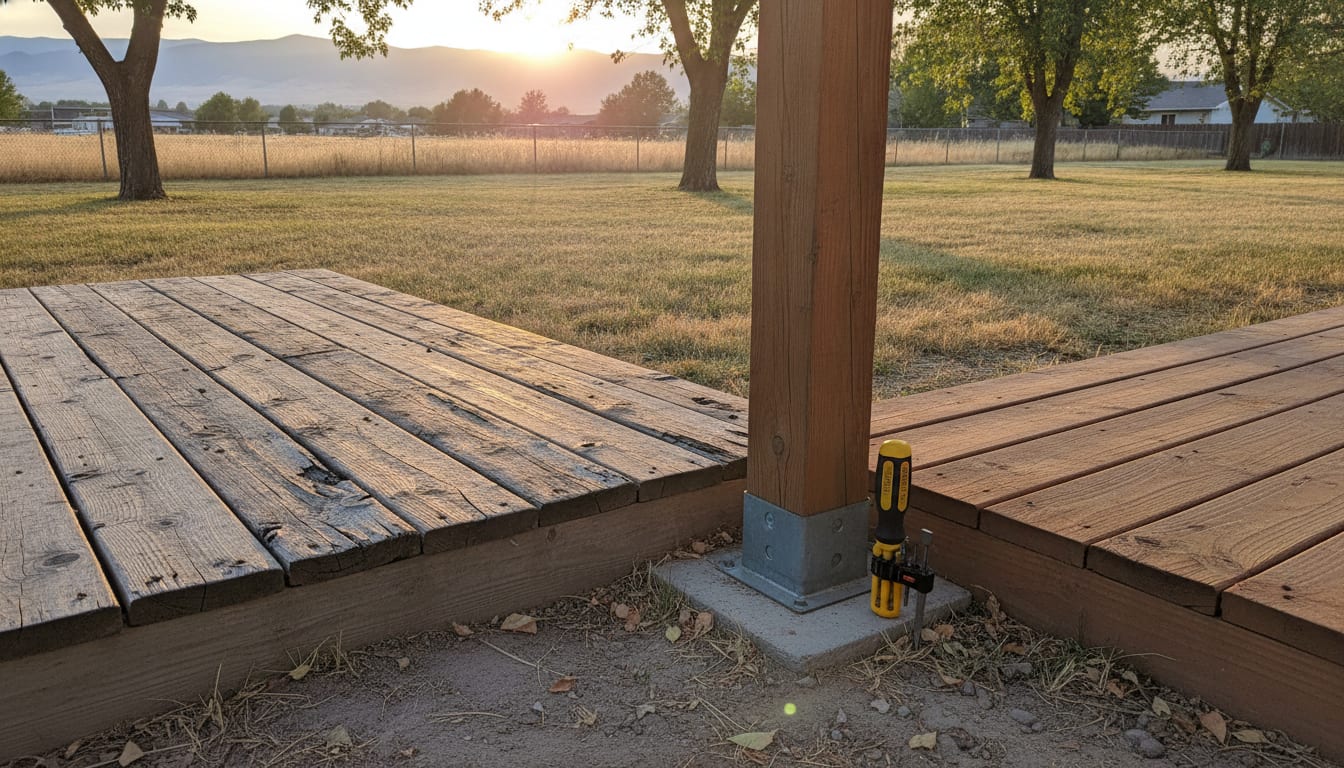
Summer is hard on an Idaho deck. Three months of sun, barbecues and bare feet will show you exactly what shape yours is really in. End of summer, before the first frost sets in, is the right time to walk around out there with a cup of coffee and actually look at the thing instead of just using it.
BelAir Construction has been building and fixing decks around Nampa since 1996, and the question we get asked the most is some version of: is this worth fixing, or should I just tear it out and start over? Here is how to think about it before Clete ever comes out to look.
Start With the Structure, Not the Surface
A deck has two parts worth separating in your head: the bones (footings, posts, beams, ledger board, joists) and the skin (decking boards, railings, stairs). Skin problems are almost always a repair. Bone problems usually point toward a rebuild.
Check the ledger board where the deck attaches to the house. Push a screwdriver into it. If it's soft or crumbly, water has been getting behind it for a while, and that's a structural issue, not a cosmetic one. Check posts at ground level the same way. Wobble the railings. A little give in an old deck isn't automatically alarming, but a post that rocks at its base usually means the footing has shifted or rotted.
Signs You're Looking at a Repair
- A handful of cupped, splintering or gray boards among otherwise sound decking
- Loose railings or balusters that just need refastening
- Stair treads that have worn out faster than the rest of the deck
- Surface staining or mildew with solid wood underneath
- Hardware that has rusted or loosened over the years
This kind of work is squarely handyman and deck repair territory, and it's often cheaper and faster than people expect, because the frame underneath is doing its job fine. It's also exactly the kind of job worth bundling with the rest of your list — fence repair, a sticking door, loose siding — in one visit rather than four separate calls.
Signs You're Looking at a Rebuild
- Rot at the ledger board or where posts meet footings
- A deck that feels bouncier than it used to, especially with weight on it
- Footings that were never sized right for the deck above them
- A deck built without proper flashing, so water has been getting behind the siding for years
- Multiple structural members failing at once, not just one spot
When the frame itself is compromised, patching the decking on top of it is a bit like repainting a car with a cracked frame. It looks better for a season and then the real problem resurfaces. A full deck rebuild in Nampa often makes more sense once you're past a certain point, and it's also the chance to fix a layout that never worked — add stairs where you actually use them, or build a covered deck or patio cover that gives you real shade through an Idaho summer instead of a strip of boards that bakes all afternoon.
What This Looks Like Around the Treasure Valley
In Meridian especially, a lot of decks went up in the 1990s and 2000s to similar builder specs, and they're reaching the end of their life together, right alongside the garage doors, fencing and trim from the same era. If your deck is one piece of a bigger punch list, that's normal — send the whole thing over rather than just the deck.
Out on acreage in Middleton, Melba, Wilder, Parma, Marsing or Emmett, decks sometimes take a back seat to barns, shops and outbuildings, but the same structural logic applies to all of it: check the bones before you worry about the skin.
Working to a Real Budget
A rebuild doesn't have to mean the catalogue option. Reclaimed lumber, sensible material substitutions and a straightforward design instead of a complicated one are all legitimate ways to keep a project inside a real budget. That's a deliberate choice BelAir makes with homeowners regularly, not a downgrade, and if an alternative would be a false economy on your specific deck, you'll be told that plainly instead.
Why Clete Needs to Actually Look at It
Nobody can tell you repair or rebuild, or give you a number, from a phone description. Rot hides under decking boards. A post can look fine above ground and be gone below it. Clete comes out, gets under the thing, checks the framing, and quotes it properly from there — usually within 5 to 7 days of your call, with most work starting inside the month. A price given sight-unseen is either padded to be safe or just wrong, so we don't do that. The visit costs you nothing but time.
Frequently Asked Questions
How do I know if my deck just needs a few boards replaced?
If the posts, beams and ledger board are solid and it's only the surface decking or railings showing wear, that's usually a straightforward repair. The way to be sure is to check the framing underneath, not just the top.
Is a deck rebuild more disruptive than a repair?
Generally yes, since a rebuild means removing the old structure down to the footings in most cases. But it also means you get to fix whatever never worked about the layout — adding a covered deck, moving the stairs, or widening it — rather than just patching the same design again.
Can you look at my whole property, not just the deck?
Yes, and that's often the better approach. If you've got a sagging gate, a few loose fascia boards, or a punch list building up, send it all over at once. BelAir is a jack of all trades, and one visit for the whole list is usually cheaper than separate trips for each item.
Want a real number on your job?
Clete comes out, looks at it and quotes it properly. Send the whole list.