Closing In a Pole Barn Before Winter: A Nampa, ID Checklist
Nov 9, 2026 · 5 min read
Every fall we get the same call. Somebody walks out to the barn, looks up, and notices daylight where there shouldn't be any. Or a door that used to seal tight now rattles in the wind. Closing in a pole barn before winter in Nampa, ID isn't complicated work, but it has a deadline, and that deadline is whenever the first real snow decides to show up.
We're based right here in Nampa, on Sunrise Rim Road, and we've been doing this kind of work since 1996. Pole barns, shops, hay storage, equipment sheds — if it's a post-frame building anywhere from Nampa and Caldwell out to Middleton, Melba, Wilder, Parma, Marsing or Emmett, we've probably patched one like it.
Why Fall Is the Window
Idaho winters aren't the worst in the country, but they're plenty capable of turning a small gap into a big problem. Wind-driven snow finds every seam. A missing panel or a soft spot in the roof that was a non-issue in July becomes an ice dam or a soaked hay bale by January. The building doesn't need to be perfect. It needs to be closed up — roof tight, siding sound, doors sealing — before the weather turns.
Most of what we see this time of year isn't dramatic. It's a dozen small things that add up to a barn that leaks or lets cold air pour in. That's actually good news, because it means a fall tune-up usually solves it, rather than a full rebuild.
Re-Roofing: What to Look For
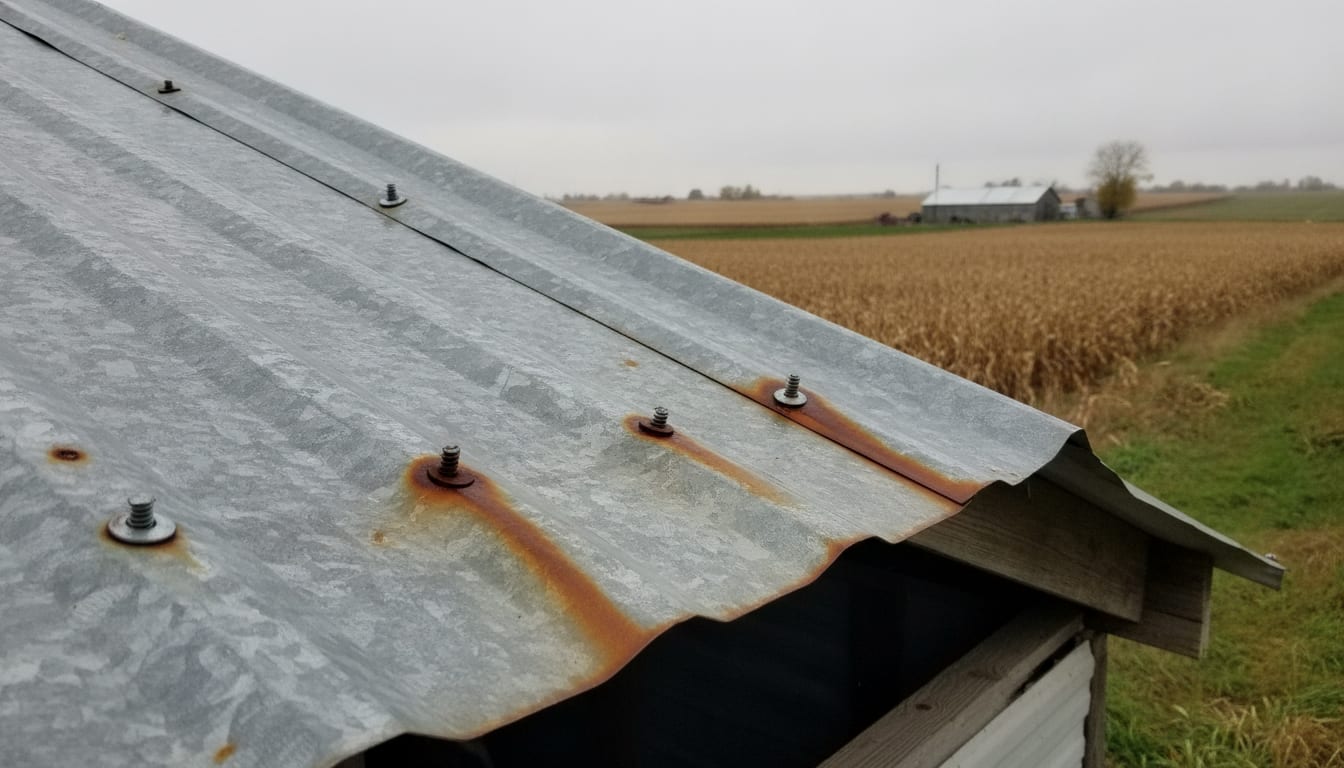
Metal roofing on a pole barn takes a beating from sun and wind over the years. Screws back out, washers dry-rot, panels lift at the ridge or eave. Walk the roof line from the ground with binoculars before you walk it with your boots — look for rust streaks, daylight through the ridge cap, or panels that look wavy instead of flat.
Sometimes a full re-roof is warranted. Often it's a matter of re-screwing loose fasteners, replacing a handful of rusted panels, and resealing the ridge cap and any flashing around vents or chimneys. Clete will tell you straight which one your building needs — there's no upside to selling someone a new roof they don't need, and no upside to patching one that's actually done.
Re-Siding and the Gaps You Don't Notice
Siding failures on outbuildings are usually at the bottom — splash-back rot where siding meets the ground or a concrete curb, and at corners where trim has pulled away. Check the man door and any sliding or roll-up doors too. A quarter-inch gap doesn't look like much until it's letting in snow sideways in a January wind.
Re-siding doesn't have to mean stripping the whole building. Spot repairs on bad panels, resealing trim, and closing gaps at penetrations handles most of what we find. If the whole south or west wall has taken the brunt of years of sun and weather, that's a different conversation, and one worth having before the snow, not after.
Garage Doors and Barn Doors
Doors are where cold air gets in fastest. Track alignment drifts over a season of use, rollers wear, and weather seals crack and shrink. On a shop or barn with a garage door, that's a straightforward fix most of the time — new seal, aligned track, maybe a spring or cable replaced. We handle garage door supply and installation, openers, and repair work the same way whether it's on a house or a pole barn out past Parma.
If a door won't close square or won't latch at all, don't wait. That's the kind of thing that gets worse with every freeze-thaw cycle, and it's an easy one to flag as urgent when you call.
One Call for the Whole List
Here's the thing about outbuilding work — it's rarely just one item. It's a loose panel, a door that drags, a soffit gap, and a gutter that's pulled away from the fascia, all on the same building. That's exactly the kind of list BelAir Construction likes to see. Send the whole thing over instead of just the worst item. One visit, one trip charge, and Clete can usually knock out several repairs while he's already up on the roof or at the door track.
We also work to whatever budget you're bringing to it. Reclaimed siding or a sensible repair instead of a full panel replacement is often the smarter call, not a lesser one — especially on a barn that's otherwise sound.
Clete typically gets out to look at a job within 5 to 7 days of a call, and most work starts inside the month. That timeline gets tighter as the weather turns, so earlier is better than later if you want it buttoned up before the first snow.
Frequently Asked Questions
How do I know if my pole barn needs a full re-roof or just repairs?
That depends on the condition of the panels, fasteners, and ridge cap, and it's hard to say for certain without eyes on it. Clete comes out, looks at the roof, and tells you honestly whether it's a repair job or a replacement job.
Can you fix just the doors, or do you need to do the whole building?
Just the doors is fine. Garage doors, man doors, sliders — repair or replacement, standalone or as part of a bigger punch list. Small jobs are genuinely welcome.
How soon can someone come look at a barn before winter hits?
Usually within 5 to 7 days of the call, with most work starting inside the month. If something is letting water or snow in right now, say so when you call and it gets flagged as urgent.
Want a real number on your job?
Clete comes out, looks at it and quotes it properly. Send the whole list.