
Drone Roof Inspections in Nampa
Most roof problems start where nobody can see them from the ground. A drone sees them without anyone climbing up.
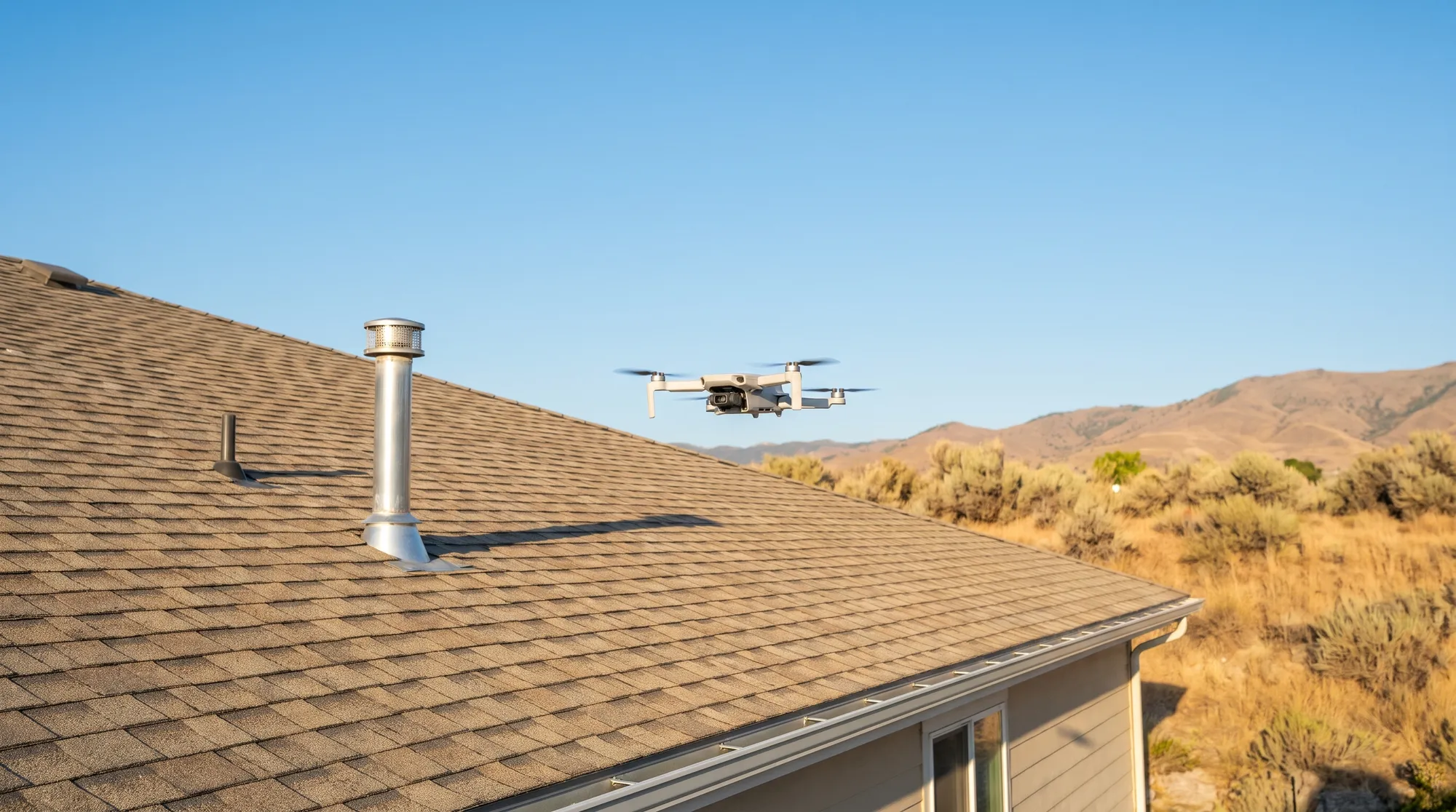
A roof is the hardest part of a house to keep an eye on. From the driveway it looks fine for years, while shingles lift, flashing works loose around a vent and granules wash into the gutters. By the time it shows inside as a stain on the ceiling, the water has usually been getting in for a while.
A drone gets a camera close to every slope, ridge, valley and penetration without a ladder or a person on the roof. That matters on steep pitches, two-storey houses and older roofs that are better not walked on, and it is quicker and safer than climbing. The photos show exactly what is up there, so you see the same thing the assessment is based on.
Treasure Valley roofs take hard sun all summer, wind storms, the occasional hailstorm and freeze-thaw through the winter. After a storm, before you buy or sell, or when a roof is simply getting on in years, a flight answers the question of what it actually looks like. A drone sees the surface, not the decking underneath, so where photos point at something deeper it gets said plainly, along with whether it is a small repair, part of a home inspection, or a job for a roofer.
What's included
- Full aerial photo survey of every roof slope
- Shingles: lifted, cracked, missing or worn through
- Flashing at vents, chimneys, skylights and walls
- Ridges, valleys and roof-to-wall joins
- Gutters, downspouts and roof drainage
- Storm, wind and hail damage photos
- Outbuildings, barns and shop roofs
- Written summary with the photos and next steps
Want a number on your project?
Clete comes out, looks at it, and puts the scope in writing.
How a drone roof inspections job runs
What prompted the call
A storm, a leak, a sale or a roof getting old. The reason decides what the flight looks at most closely.
Fly the roof
Every slope photographed from above and close in, with extra passes over penetrations, valleys and anything that looks wrong. Wind and rain decide the day.
Look from the ground and inside too
Gutters, fascia and any ceiling stains get checked as well, because the roof and the rooms under it tell the story together.
Photos and findings
The photos, with a plain summary of what is fine, what needs watching and what needs fixing, and how soon.
What you get out of it
- Nobody on the roof. No ladder against the gutters and no boots on shingles that may already be fragile.
- You see what we see. Close-up photos of every slope, instead of a verbal report from someone who climbed up alone.
- Read by a builder. Thirty years of building and repairing houses is what turns a set of roof photos into a clear answer on what matters and what can wait.
Often booked alongside
Drone roof inspections questions
Is a drone inspection as good as someone walking the roof?
For seeing the surface, usually better, because the camera gets close to every slope including the ones that are unsafe to walk. What a drone cannot do is feel for soft decking underfoot. Where the photos suggest a problem below the surface, that is said plainly and checked another way.
Can the photos help with a storm damage claim?
Clear, close photos of the damage are the kind of thing an insurance claim needs, and you are welcome to share them with your insurer. What your policy covers is between you and your insurance company.
What if the weather is bad on the day?
Drones do not fly in strong wind or rain, so the flight moves to the next calm, dry day. If a roof is actively leaking, call anyway. A temporary fix should not wait on the weather.
Let's talk about your drone roof inspections project.
Call (208) 960-7046 or send the details — no obligation either way.