
Fall Acreage Property Cleanup Guide for Canyon County
Nov 2, 2026 · 5 min read
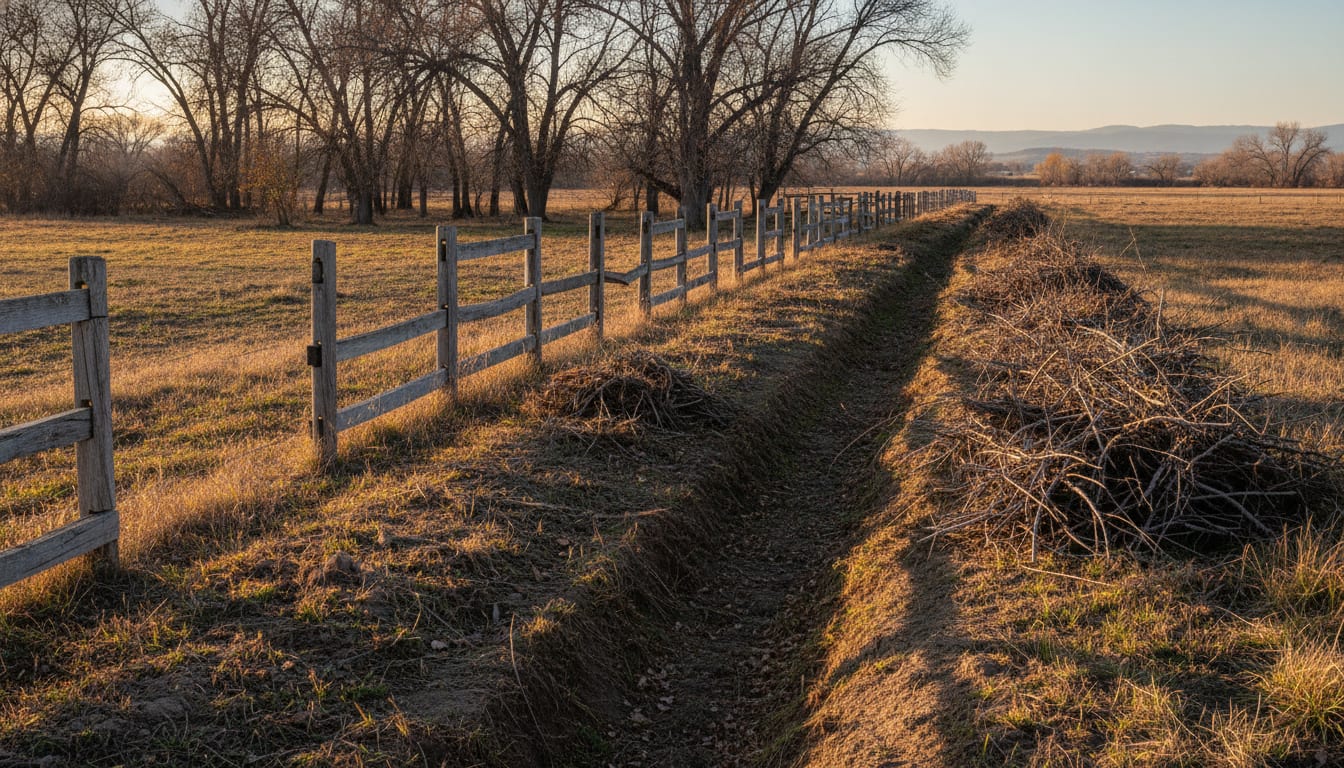
If you own acreage anywhere around Nampa, Caldwell, Melba or out toward Wilder and Parma, fall is the season that decides how your winter goes. Once the ground freezes or the snow stacks up, whatever you didn't deal with in October is stuck until spring. That brush pile, that sagging fence line, that drainage ditch full of leaves — it all sits there until the thaw.
This is a guide to what actually matters this time of year on rural and semi-rural Canyon County properties, and what can wait.
Start With Water, Not Brush
Most people start a fall cleanup with the pile of branches or the overgrown fence row, because it's the most visible mess. But water does more damage over a winter than anything else sitting on your property. Walk your drainage paths — ditches, culverts, low spots near a barn or shop foundation — and clear anything blocking flow. A clogged ditch that backs up during a late-fall rain, then freezes solid, can cause real grading problems by spring.
If water has been pooling somewhere it shouldn't, or a drive has started washing out, that's a grading and drainage correction job, not a rake-and-bag job. Worth having someone look at it before winter locks the ground up, not after.
Overgrowth Along Fences, Drives and Outbuildings
Brush and weeds pressed up against a fence line, a pole barn wall, or a shop foundation hold moisture against wood and siding all winter. On older barns especially — and Canyon County has plenty of barns worth keeping rather than tearing down — that moisture is what starts rot in sills and siding that otherwise had years left in them. Clearing growback a few feet off any structure before snow is cheap insurance.
Same logic applies to access drives. If brush has narrowed a drive or hangs low enough to scrape a truck or trailer, clear it now. Getting a vehicle or equipment down a snowed-in drive with narrowed clearance is its own headache.
Debris Piles, Old Equipment and Structures Past Saving
Acreage tends to accumulate things — old fencing, a collapsed lean-to, scrap lumber, a trailer nobody's moved in years. Fall is a good time for a real cleanout, especially if you're prepping a property to sell, rent out, or just want it squared away before the snow covers everything up and makes it someone else's problem come March.
This is property cleanup and cleanout territory: debris removal, clearing overgrowth, pulling down a structure that's beyond repair. If there's an old shed or lean-to that's more hazard than help, that's often better removed than left to become a snow-load problem over winter.
Check the Barns and Outbuildings While You're At It
Since you're already out walking the property, take a look at roofs, siding and doors on any barn, shop or outbuilding. A re-roofing or re-siding job you put off in summer doesn't get easier with snow load added on top of a weak spot. If a door won't seal properly, that's worth fixing before winter too — a garage or barn door that won't close right lets weather in all season.
One Call for the Whole List
Here's the thing about acreage in fall — it's never just one job. It's drainage here, a fence repair there, a brush pile, a barn door that sticks, maybe a cleanout of an old structure nobody's used in years. Most people tackle it piecemeal, or don't tackle it at all because calling four different contractors for four small jobs feels like too much effort.
BelAir Construction is set up for exactly that list. Send the whole thing — drainage, overgrowth, debris, a sagging gate, a barn repair — instead of just the worst item on it. It's usually cheaper to handle in one visit than to call separately for each piece, and it's the kind of work that gets passed over by contractors who only want the big job.
What Can Wait Until Spring
Not everything needs doing before snow. Cosmetic fence repairs, landscaping that's purely about appearance, and projects that don't involve water, structure or access can usually sit until the ground thaws. The priority list before winter is water, access, and anything structural that moisture or snow load would make worse.
Clete comes out and looks at the property directly rather than guessing from a description — acreage is too variable for a number given sight-unseen to mean anything. That visit usually happens within 5 to 7 days of a call, and most work starts inside the month, which still leaves time before the ground freezes if you call soon.
Frequently Asked Questions
What should I prioritize on acreage before winter?
Water first — drainage, ditches, anything pooling near a foundation or drive. Then overgrowth pressed against structures, and any debris or old buildings that could become a snow-load problem. Cosmetic work can usually wait until spring.
Do you handle both the cleanup and the repair work, or just one?
Both. BelAir Construction is a general contractor and jack of all trades, so a property cleanup and the barn repair, fence fix or drainage correction that comes with it can usually be handled in the same visit rather than calling separate people.
How far out do you work from Nampa?
Roughly 45 miles, covering the greater Boise metro and Treasure Valley, including Caldwell, Meridian, Melba, Wilder, Parma, Marsing and Emmett. If your town isn't on that list, it's worth asking Clete directly rather than guessing.
Want a real number on your job?
Clete comes out, looks at it and quotes it properly. Send the whole list.